
Apostolic succession is a foundational doctrine in both Roman Catholic and Eastern Orthodox traditions, referring to the uninterrupted transmission of spiritual authority (and teachings) from the apostles to bishops and presbyters through the laying on of hands. This ensures the continuity of the Church’s teaching, sacraments, and governance. However, the two traditions diverge significantly in how they understand the structure of this succession and its implications for ecclesiology—the doctrine of the Church.
The Orthodox emphasize a eucharistic and local understanding, rooted in patristic sources, where each local church embodies the fullness of the Catholic Church. In contrast, Roman Catholics view the Church as a universal organism with a centralized hierarchy under the Pope.
This article explores these differences, drawing on early Church Fathers, and addresses a common Roman Catholic interpretation of St. Cyprian’s On the Unity of the Catholic Church that Orthodox scholars argue misrepresents his intent.
The Orthodox and Patristic View: Each Local Church as the Whole Catholic Church
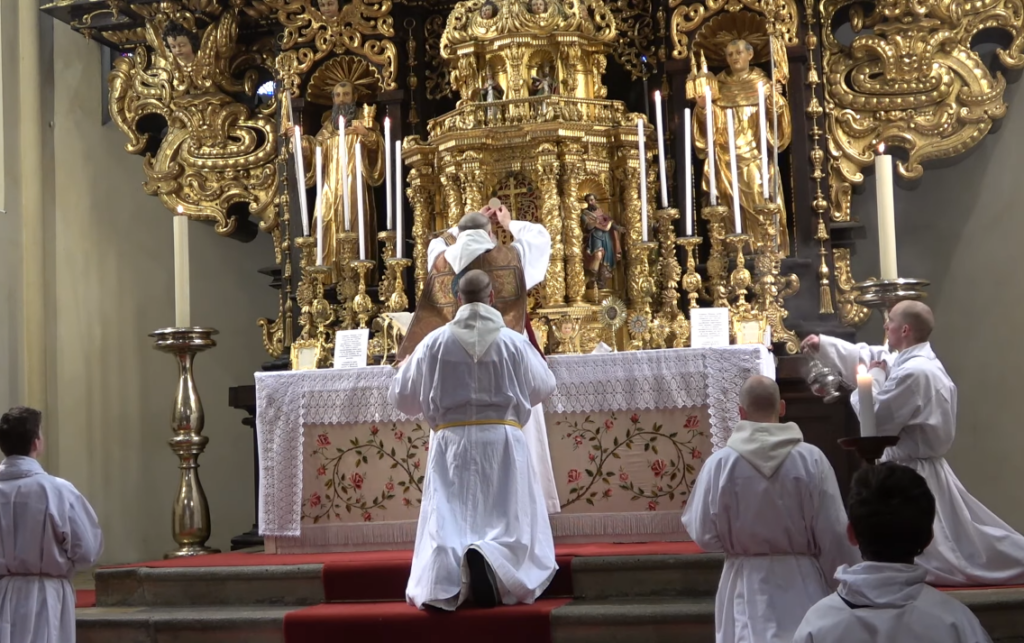
In the Eastern Orthodox tradition, apostolic succession is not primarily about a global hierarchy but about the fullness of the Church present in every local eucharistic community. This perspective aligns with patristic thought, where the local church—gathered around its bishop for the Eucharist—is seen as the complete manifestation of the one, holy, catholic, and apostolic Church. Here, “catholic” means “whole” in essence, not merely a part or portion of a larger entity.
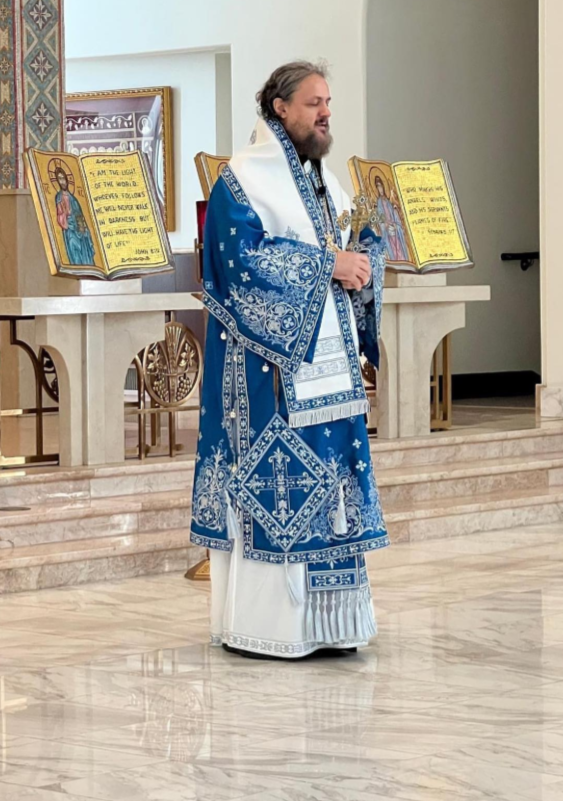
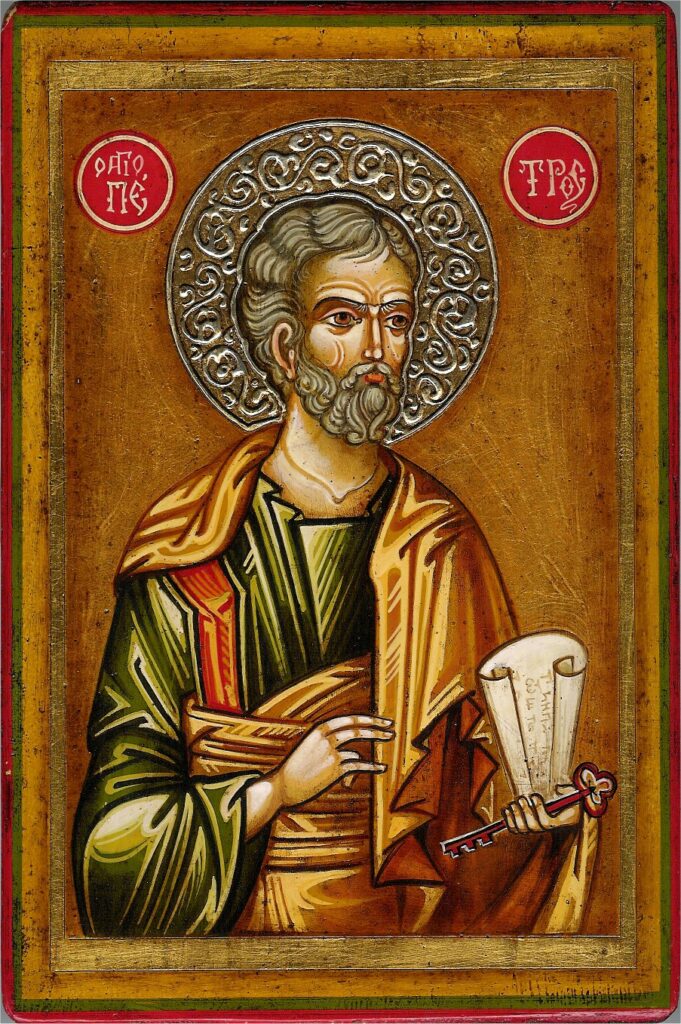
The bishop in each local church holds the place of Peter, symbolizing unity and authority, while the presbyters (priests) represent the apostolic college surrounding him.
This view is found, for instance, in the letters of St. Ignatius of Antioch (c. 35–107 AD), a disciple of the Apostle John and an early bishop whose letters emphasize ecclesial unity. In his Epistle to the Smyrnaeans, Ignatius writes:
“See that you all follow the bishop, even as Jesus Christ does the Father, and the presbytery as you would the apostles; and reverence the deacons, as being the institution of God.”
He further states:
“Wherever the bishop shall appear, there let the multitude [of the people] also be; even as, wherever Jesus Christ is, there is the Catholic Church.”
For St Ignatius, the bishop embodies Christ’s presence, and the presbyters mirror the apostles, making the local assembly a microcosm of the universal Church (where universal means all believers in Christ through space and time).
This is not a diminishment of unity but its manifestation and fulfillment: every local church is “the Catholic Church,” not merely “a Catholic church.” As Cornelius of Rome wrote to this colleague Fabian of Antioch around 255 AD:
“But know that Novatian, the defender of the Gospel, did not know that there ought to be one bishop in the Catholic Church; for how could he, when he did not know that in it there were forty-six presbyters, seven deacons, seven subdeacons, forty-two acolytes, fifty-two exorcists, readers, and doorkeepers, and over fifteen hundred widows and persons in distress, all of whom the grace and loving-kindness of the Master supports?”
Apostolic succession, therefore, preserves this local wholeness, with bishops succeeding the apostles in their teaching and sacramental roles within their communities.
Patristic sources reinforce this. The early Church Fathers viewed the local church as autonomous yet in communion with others through shared faith and mutual recognition. This eucharistic ecclesiology means that the Church’s unity is realized in the mystery of the Eucharist celebrated by the bishop, surrounded by his presbyters and deacons, without needing a singular global overseer for validity. Orthodox theologians argue this reflects the apostolic era, where churches like Antioch or Corinth were fully “the Church” under their bishops.
The Roman Catholic View: The Church as a Universal Organism with Centralized Authority
In Roman Catholicism, the Church is fundamentally understood as a single, worldwide organism—a visible, hierarchical society spanning the globe. The local church (particular church in Catholic terminology) is understood as portion of the whole, not as a whole in itself.
Apostolic succession is transmitted through bishops as successors to the apostles collectively, but with a unique emphasis on the Bishop of Rome (the Pope) as the singular successor of Peter. This forms the “apostolic college,” where bishops exercise authority in union with the Pope, who holds primacy (actually supremacy) as Peter’s singular heir.
The Catechism of the Catholic Church states:
“The college or body of bishops has no authority unless united with the Roman Pontiff, Peter’s successor, as its head.”
In this system, presbyters (priests) participate in this succession but in a limited way. They are ordained by bishops and share in the priesthood, but their role is subordinate, focusing on pastoral duties within dioceses. Unlike the Orthodox view, where presbyters directly hold the place of the apostles in the local context, Roman Catholicism leaves their apostolic succession “unspecified and limited,” emphasizing the bishops’ collective role under papal primacy. This universal model draws from Matthew 16:18-19, where Jesus gives Peter the “keys of the kingdom,” interpreted in the Roman Catholic view as conferring unique authority passed to Roman bishops only (as opposed to all bishops and presbyters per Matthew 18).
Misreading St. Cyprian: Papacy or Local Episcopal Unity?
A flashpoint in this debate is St. Cyprian of Carthage’s (c. 200–258 AD) treatise On the Unity of the Catholic Church. Roman Catholics often cite it as early evidence for papal primacy, interpreting Cyprian’s references to Peter’s “chair” and the Church’s unity as pointing to Rome’s supremacy. For instance, Cyprian writes: “Upon him [Peter] He builds the Church, and to him He gives the command to feed the sheep,” which some read as endorsing a singular Roman primacy.
However, Orthodox interpreters argue that this misunderstands Cyprian’s context. Writing amid schisms in North Africa, Cyprian emphasized unity around the local bishop as the key to the Church’s oneness. He viewed every bishop as holding Peter’s “chair” in his own church (diocese), symbolizing episcopal equality and the local church’s fullness. Cyprian states: “The episcopate is one, each part of which is held by each one for the whole.” This means the bishops collectively share Peter’s authority, not that Rome alone possesses it. He resisted papal interference in local matters, such as rebaptism controversies, affirming that “no one of us sets himself up as a bishop of bishops.”
Orthodox argue the treatise addresses local schisms, not a global papacy, and that Cyprian’s actions—defying Pope Stephen I—contradict Roman claims. Roman Catholic responses maintain Cyprian’s deference to Rome in other contexts, but acknowledge his focus on episcopal unity. Catholic patristic scholar (and expert on St Cyprian) concluded:
“Cyprian clearly understood the primacy as one of honor and that the bishop of Rome was primus inter pares.”
Conclusion: Implications for Christian Unity
These views reflect slowly diverging ecclesiological directions: Orthodox conciliarity versus Roman centralism. The Orthodox model fosters autocephaly (self-governing churches) in communion, while the Roman model ensures doctrinal uniformity through papal authority.
For Roman Catholics, the head of the Church is primarily Jesus Christ, and visibly the Pope of Rome as Vicar of Christ and Successor of St Peter. For Orthodox Christians, the head of the Church is primarily Jesus Christ, and visibly the local bishop who holds the place of Peter in the Eucharistic assembly.
Both claim patristic roots, but interpretations differ. Understanding how the same expression “apostolic succession” can mean different things is important to avoid speaking past each other and to recover the apostolic model of unity at the local level and among churches.