
The Divine Liturgy of the Orthodox Church (primarily the Liturgies of St. John Chrysostom, St. Basil the Great, and the Presanctified Gifts) is the central act of Orthodox worship. Its meaning can be explained in the following key points:
1. It is very ancient and basically unchanged
The core structure and many prayers of the Orthodox Divine Liturgy date back to at least the 4th–5th centuries (with roots going even earlier). While minor local variations and hymnographic additions have appeared over time, the essential form, theology, and ritual actions have remained substantially the same for over 1,500 years, making it one of the most ancient continuously used liturgies in Christendom.
2. It is based on the idea of the heavenly pattern of worship
Orthodox theology understands the Divine Liturgy as the earthly reflection of the eternal worship offered before the throne of God in heaven. This conviction is drawn directly from biblical theophanies:
– Moses receiving the pattern of the Tabernacle on Mount Sinai (Exodus 25:40; Hebrews 8:5)
– Isaiah’s vision of the seraphim crying “Holy, holy, holy” around the throne (Isaiah 6)
– Ezekiel’s vision of the divine chariot-throne (Ezekiel 1)
– The heavenly liturgy described in Revelation 4–5, with the Lamb, the living creatures, the elders, and the unending Trisagion hymn
The church on earth therefore worships in conscious continuity with, and participation in, this eternal heavenly worship.
3. It represents the fulfilment of the Pentateuch (notably Leviticus) in the New Covenant
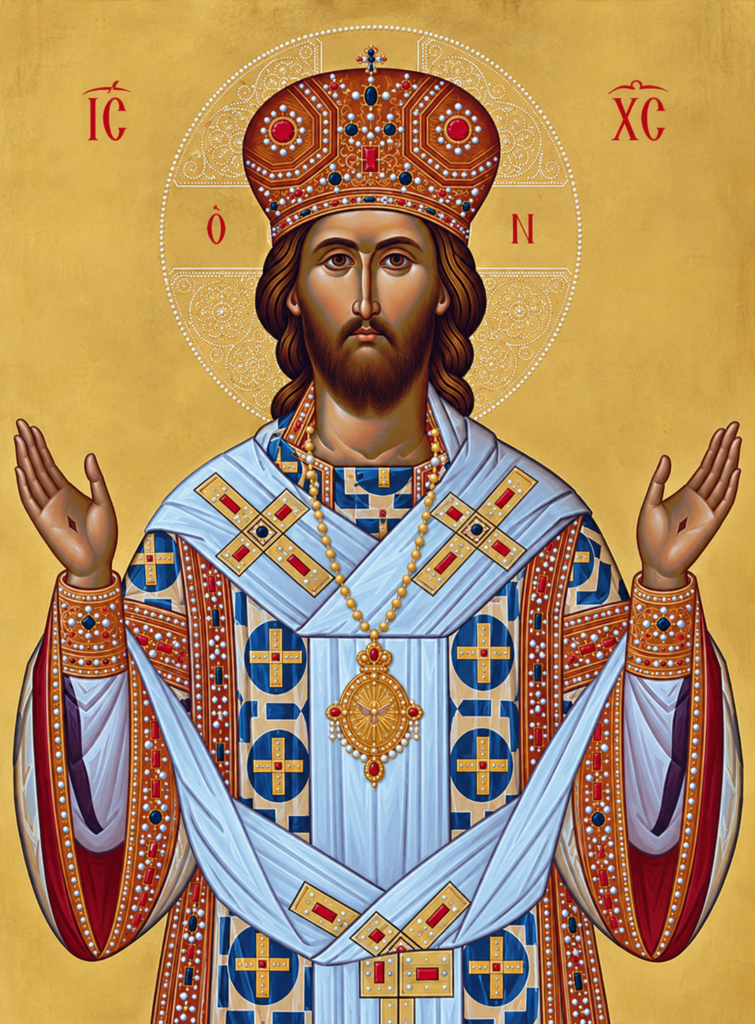
The Old Testament worship prescribed in the books of Exodus and especially Leviticus—sacrifices, priesthood, incense, the sanctuary, the showing of bread, the sprinkling of blood—is not abolished but fulfilled and transformed in Christ. In the Divine Liturgy, Jesus Christ, the true High Priest and spotless Lamb, comes personally to His people. The Eucharist is the new Passover sacrifice, offered on the altar (which represents both Golgotha and the heavenly throne), and the faithful enter the Holy of Holies—not a material one, but the reality to which the old Tabernacle pointed.
4. The entire plan of salvation is re-presented
The Divine Liturgy is not merely a memorial or a symbolic reenactment; it mystically makes present the whole economy of salvation:
– It begins with the revelation of God as “Thrice-Holy” (the Trisagion hymn, echoing Isaiah 6 and Revelation 4).
– The readings and hymns proclaim the Incarnation, the saving works of Christ, and the lives of the saints.
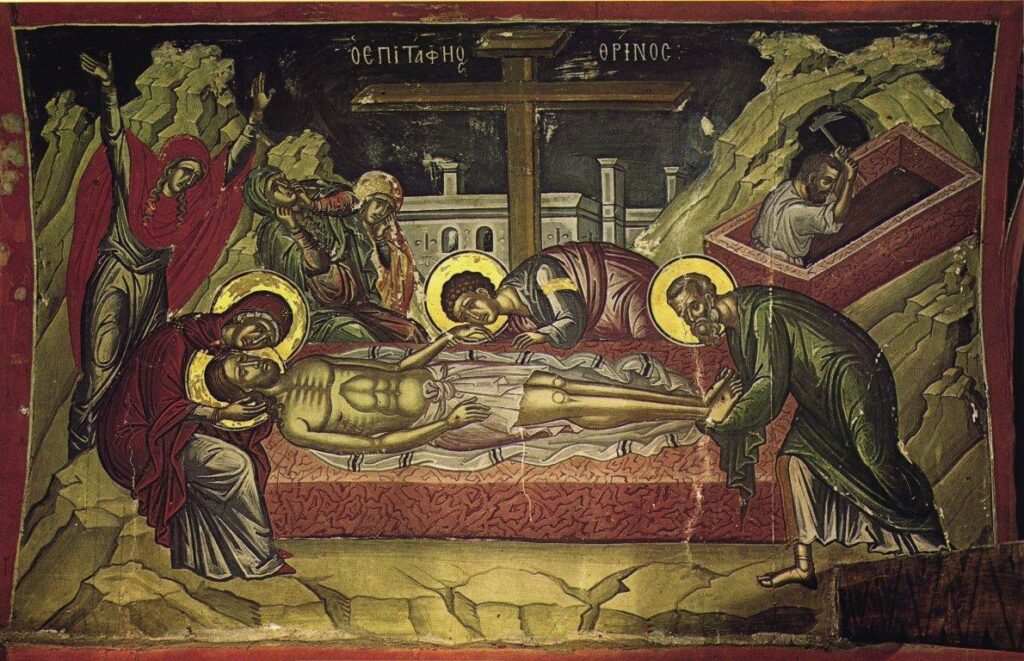
– The Great Entrance re-presents Christ going forth to His voluntary passion.
– The anaphora (eucharistic prayer) proclaims and makes present the death, resurrection, ascension, and second coming of Christ.
– The epiclesis calls down the Holy Spirit to transform the gifts into the Body and Blood of Christ.
– The Liturgy culminates in the Lord’s Prayer (“Our Father…”) and Holy Communion, by which the faithful are united to the risen Christ and to one another as the eschatological people of God, already tasting the Kingdom that is to come.
5. Only bishops and presbyters in apostolic succession may serve the Divine Liturgy
The celebration of the Eucharist is reserved exclusively to bishops and presbyters (priests) who stand in the unbroken historic succession from the Apostles. This succession, transmitted through the laying on of hands, is understood as preserving both the authenticity of the apostolic faith and the grace of the Holy Spirit necessary to consecrate the holy gifts and shepherd the Church. Deacons and laity have essential roles, but the offering of the bloodless sacrifice belongs only to those ordained in this succession.
In summary, the Orthodox Divine Liturgy is heaven on earth, the fulfilment of the Old Covenant, the making-present of the whole mystery of Christ, and the foretaste of the Kingdom—celebrated in unbroken continuity with the apostolic Church and offered by priests who continue the ministry entrusted to the Apostles by the risen Lord.
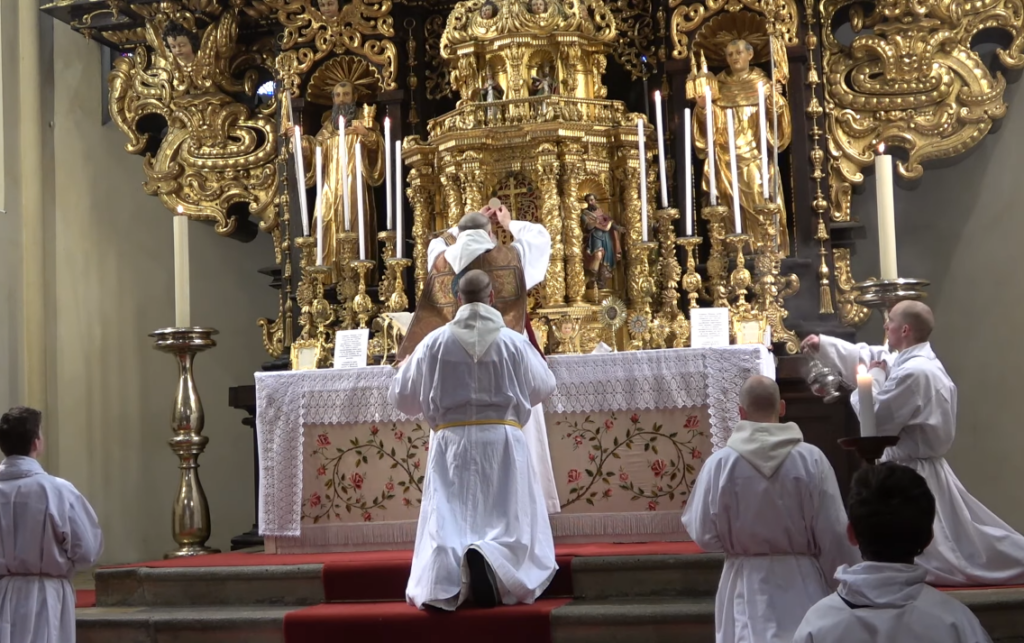
Below: The consecration of the Holy Eucharist in a Romanian Orthodox Church – one does not need to understand to appreciate the holiness and spiritual power of the Divine Liturgy of the Orthodox Church: